
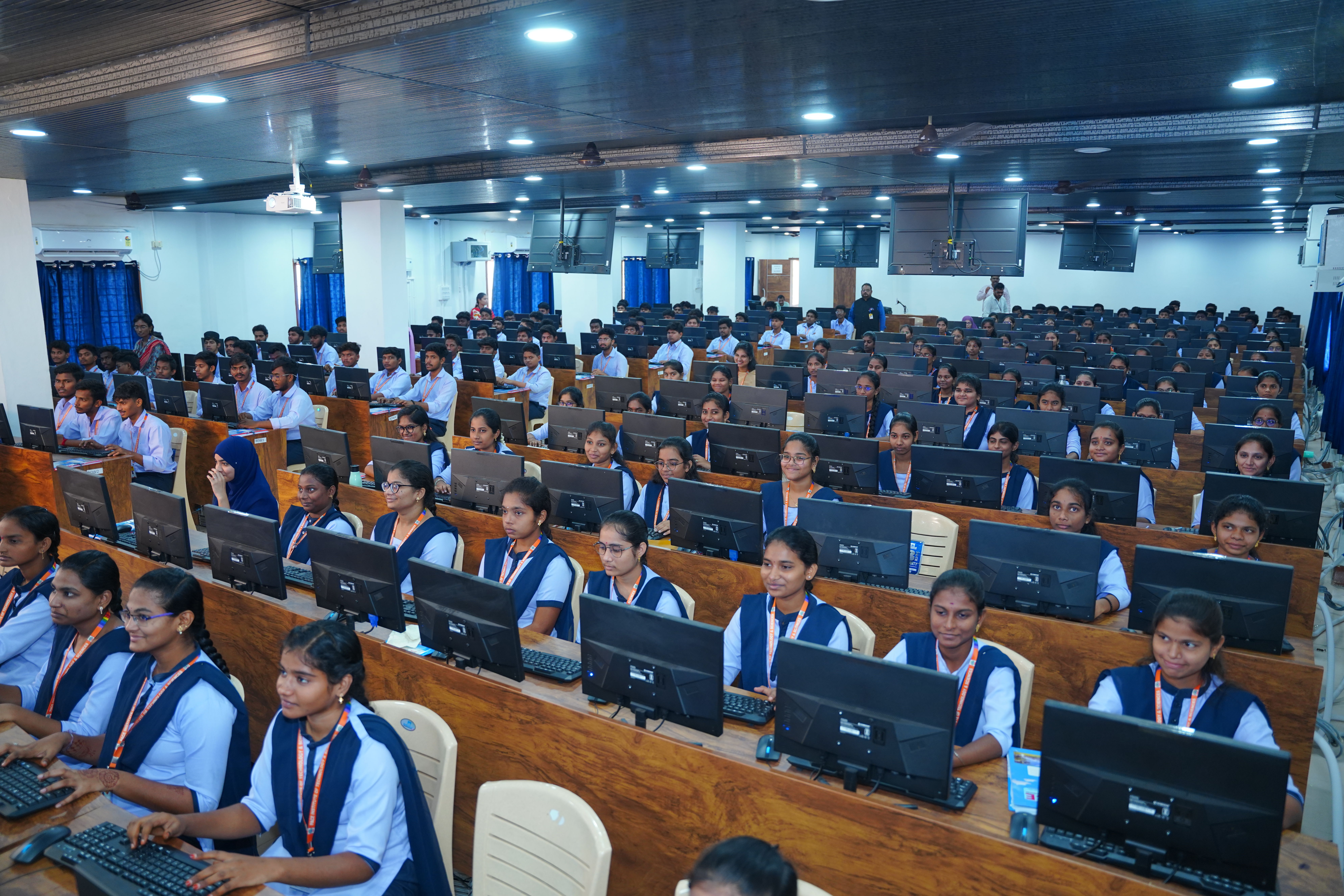
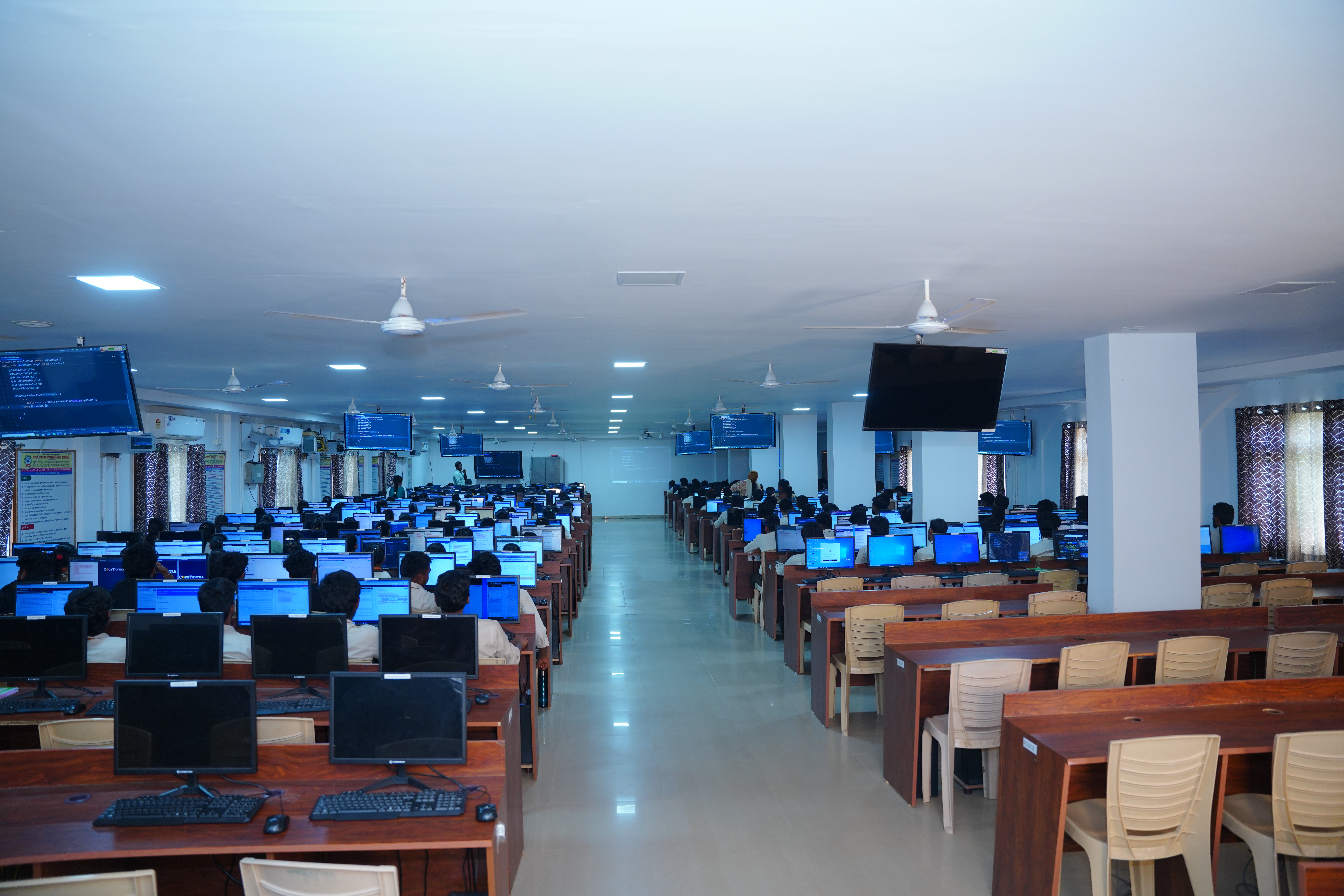
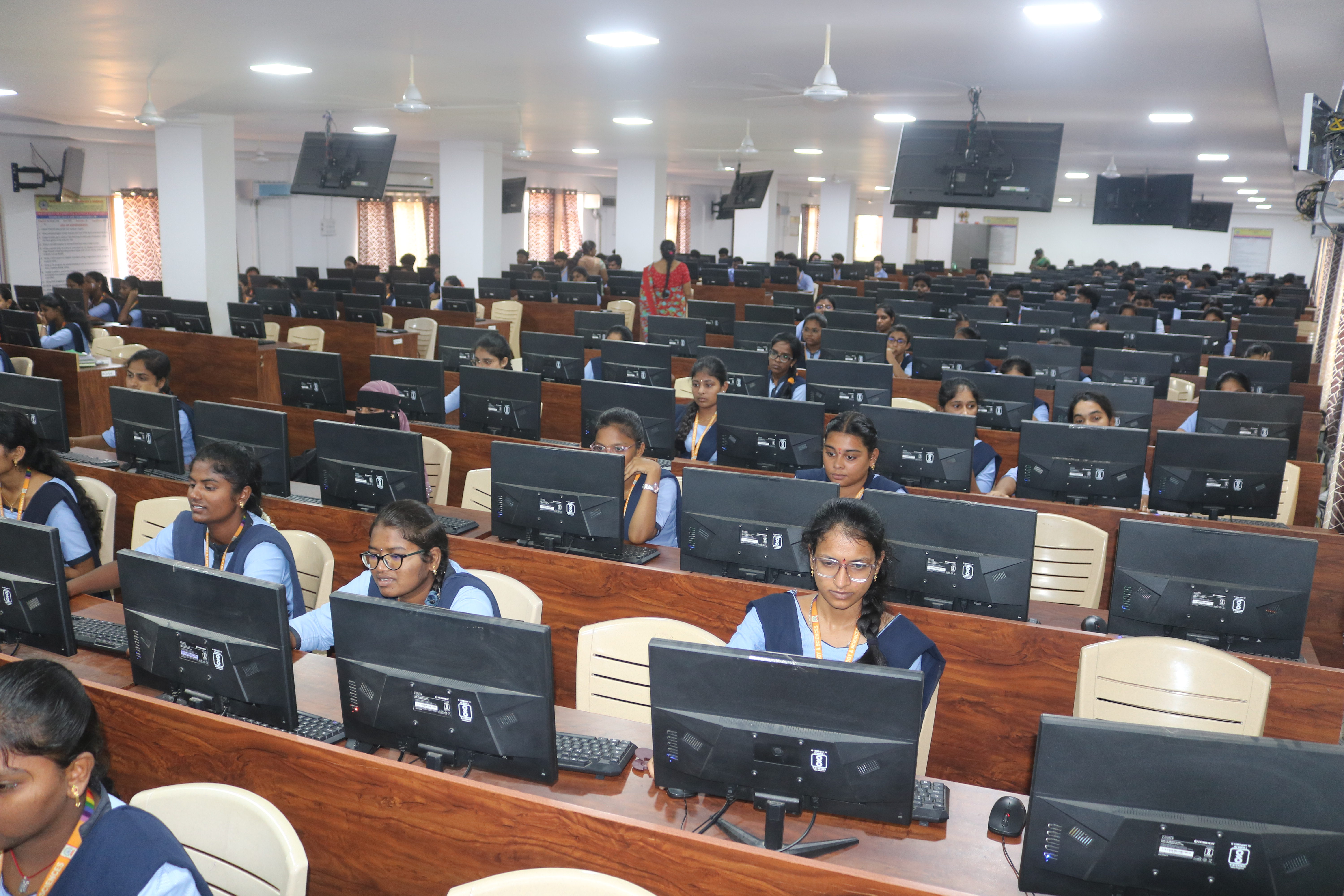
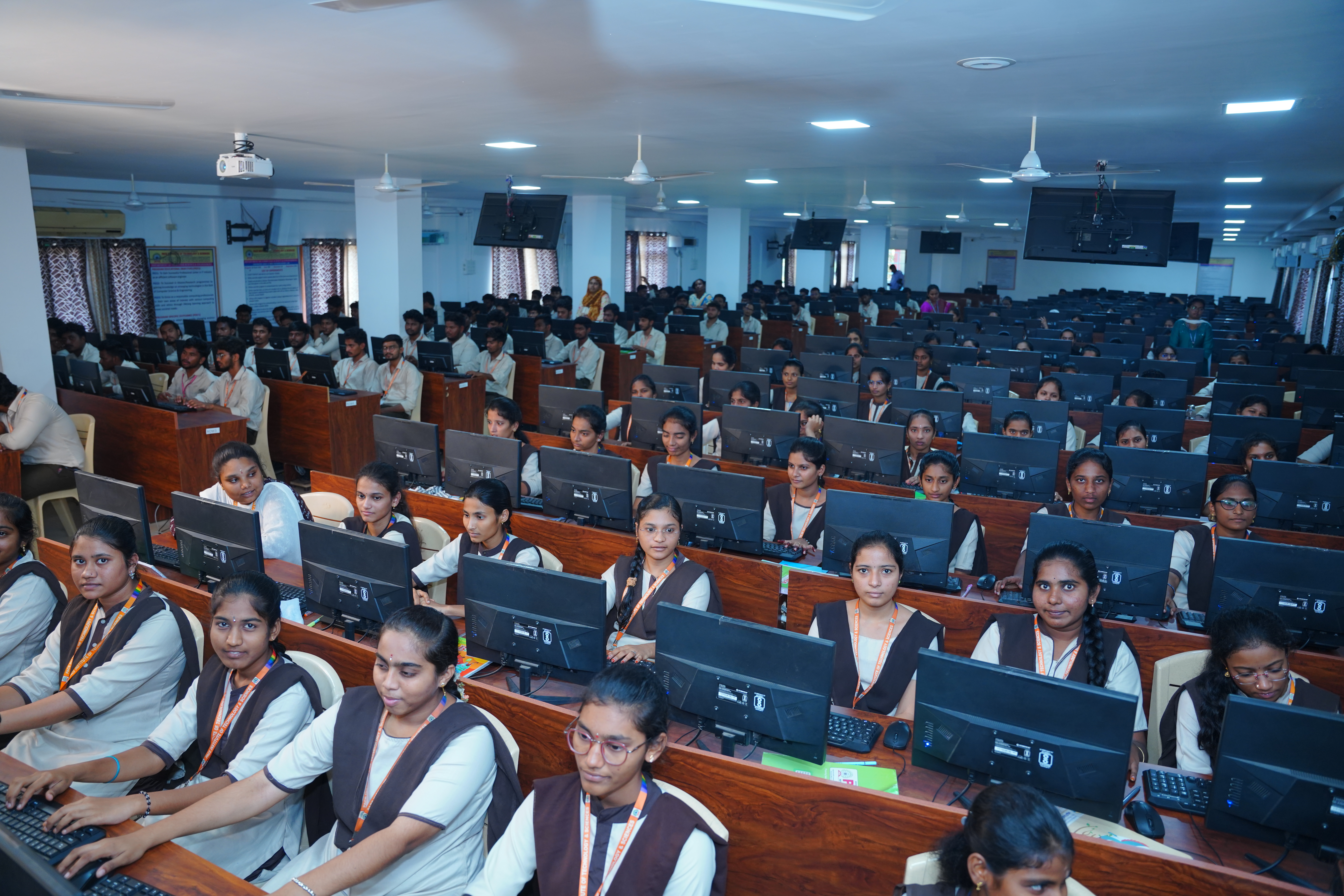
The Department of Computer Science and Engineering at PACE ITS was started in the year 2008 with an intake of 60 students in B.Tech. Subsequently, the intake was enhanced from 60 to 120 in the academic year 2012-2013, 180 in the academic year 2018-2019. In the academic year 2012-2013, a PG programmes was sanctioned M.Tech(CSE) with an intake 18. . The Department has state-of-the-art infrastructure and computing equipment supported by high-speed internet and wireless networks.
Modern instruction and cutting-edge research are highlights of the Department of Computer Science and Engineering. The Department offers a superb atmosphere for research that is supplemented by top-notch instruction. Our faculties, who have extensive backgrounds in both teaching and research, strive to provide top-notch instruction. By identifying areas of interest and taking part in sponsored research initiatives and consulting services, it also encourages active industry-institute engagement.
Since it was introduced to engineering colleges, universities, and other institutions, this has been one of the most prestigious and competitive courses to study. While India's computer industry made a name for itself in the commercial world and increased trust and profitability for the country, it also produced a significant number of well-paying positions for students of computer science and engineering. Computer Science and Engineering students will learn about basic engineering techniques, as other engineering students, during first year course. From second year they will be exposed to core computer science subjects including Programming, Advanced Data Structures, Digital Logic Design, Algorithms, Computer Networks, Operating Systems, Web Technologies, Databases and Computer Architecture are few to mention apart from trending subjects like Cloud Computing, Artificial Intelligence, Machine Learning, Data Science, Deep Learning, Image Processing IoT and Cyber security with Blockchain Technology. As Computing is extensively applied to almost every walk of life it created massive jobs for Computer Engineering students. At the same time, more demand and application kept it research funding alive attracting many students to opt for higher education.
Core companies offering jobs to Computer Science Graduates include Government organizations like DRDO, ISRO, ECIL and BHEL etc. Also, there are a huge number of multinational and national software companies which offer jobs. To name few, IBM, TCS, Capgemini, Infosys, Wipro, CTS, Deloitte, MindTree, Tollplus, TA Digital, NalSoft, CGI, GlobalEdge, HCL, Snovasys, ADP, KAAR, Zensar and many more.
The Department of CSE has collaborations and MOUs with various organizations such as
| S. No. | Name and Address of Organization | Nature of MOU |
| 1 | Institute of Management and Foreign Studies(IMFS) | Higher Studies |
| 2 | Edu Skills | Skill Development(Internships) |
| 3 | Hexaware | Placements |
| 4 | Bosch | Training & Skill Development |
| 5 | Xplore Placement Club | Students Assessment & Placements |
| 6 | Code Tantra | Skill Development |
| 7 | APSSDC | Training & Skill Development |
| 8 | CISCO | Cisco N/W Academy Certifications |
| 9 | Spoken Tutorials | Certification MOOCS- IIT Bombay |
| 10 | New Mexico State University | Research Activities, Exchange of students and faculty. |
| 11 | Reference Globe | Smart Content Management System |
To keep the students up to date with cutting-edge technology, the department organizes conferences, workshops, and short-term courses. All students receive the best campus placement training by the Placement cell.
| 1 | To prosper the students as a competent professionals in the field of Computer Science and Engineering for serving industry and society as a valuable human resource. |
| M1 | To impart quality education by implementing state-of-the-art teaching-learning methods to enrich the academic competency. |
| M2 | To inculcate in the students to pursue careers in industry, academic and research. |
| M3 | To enrich the aptitude of the students in Computer Science and Engineering to face real world problems. |
| M4 | To foster computing skills with an emphasis on professional competency, interpersonal development and ethics. |
| S.No | Components of Vision Statements | Institute Vision | Department Vision |
| 1 | Forward Looking | To be a Part of National Development. | To be part of Industry and Social Development. |
| 2 | Motivating and Inspirational | To serve the nation. | To serve the Society and Industry. |
| 3 | Reflective of culture and core values | To be Ethically strong and self disciplined. | To impart the knowledge of Ethical values. |
| 4 | Aimed at bringing benefits and improvements in the future | To transform Student as a valuable resources. | To transfigure student as a Computer Science Engineer. |
| 5 | Defines reason for existence and where it’s heading | To impart futuristic technical education. | To Create Computer Science Engineering Professionals. |
Program educational objectives are the broad statements that describe the career and professional accomplishments that the program is preparing graduates to achieve.
| S.No | Elements | PEOs |
| 1 | Professionalism | To Gain Successful Professional career in IT industry as an efficient software engineer. |
| 2 | Core Competence | To Succeed in Master/Research programmes by gaining knowledge on emerging technologies in the field of Computer Science Engineering. |
| 3 | Preparation | To Grow as a responsible computing professionals in their own areas of interest with various computing skills and ethics through lifelong learning approach to meet societal needs. |
| PEO-1 | To Gain Successful Professional career in IT industry as an efficient software engineer. |
| PEO-2 | To Succeed in Master/Research programmes by gaining knowledge on emerging technologies in the field of Computer Science & Engineering. |
| PEO-3 | To Grow as a responsible computing professionals in their own areas of interest with various computing skills and ethics through lifelong learning approach to meet societal needs. |
| PO1 | Engineering knowledge: Apply the knowledge of mathematics, science, engineering fundamentals, and an engineering specialization to the solution of complex engineering problems. |
| PO2 | Problem analysis: Identify, formulate, review research literature, and analyses complex engineering problems reaching substantiated conclusions using first principles of mathematics, natural sciences, and engineering sciences. |
| PO3 | Design/development of solutions: Design solutions for complex engineering problems and design system components or processes that meet the specified needs with appropriate consideration for the public health and safety, and the cultural, societal, and environmental considerations. |
| PO4 | Conduct investigations of complex problems: Use research-based knowledge and research methods including design of experiments, analysis and interpretation of data, and synthesis of the information to provide valid conclusions. |
| PO5 | Modern tool usage: Create, select, and apply appropriate techniques, resources, and modern engineering and IT tools including prediction and modeling to complex engineering activities with an understanding of the limitations. |
| PO6 | The engineer and society: Apply reasoning informed by the contextual knowledge toassess societal, health, safety, legal and cultural issues, and the consequent responsibilities relevant to the professional engineering practice. |
| PO7 | Environment and sustainability: Understand the impact of the professional engineering solutions in societal and environmental contexts, and demonstrate the knowledge of, and need for sustainable development. |
| PO8 | Ethics: Apply ethical principles and commit to professional ethics and responsibilities and norms of the engineering practice. |
| PO9 | Individual and team work: Function effectively as an individual, and as a member or leader in diverse teams, and in multidisciplinary settings. |
| PO10 | Communication: Communicate effectively on complex engineering activities with theengineering community and with society at large, such as, being able to comprehend and write effective reports and design documentation, make effective presentations, and give and receive clear instructions. |
| PO11 | Project management and finance: Demonstrate knowledge and understanding of the engineering and management principles and apply these to one’s own work, as a member and leader in a team, to manage projects and in multidisciplinary environments. |
| PO12 | Life-long learning: Recognize the need for, and have the preparation and ability to engage in independent and life-long learning in the broadest context of technological change. |
| PSO1 | Ability to adapt to a rapidly changing environment by learning and employing new programming skills and technologies. |
| PSO2 | Ability to use diverse knowledge across the domains with interpersonnel skills to deliver the Industry need. |
To raise the standard of student projects to levels consistent with those used internationally.
Such brainstorming sessions help transfer the best practices amongst faculties in the department. Pedagogies, Innovative Assessments, Assignments, Content beyond the Syllabus are typically discussed in the sessions. A snip of one of the meetings conducted for one of the courses “Problem Solving using Computer Programming” is depicted in fig. Faculty members use the LCD Projectors for their presentations. The faculty members use these aids to take the teaching learning process to the next level. Lectures are presented by faculty members using a variety of teaching tools such as chalk and board, PowerPoint presentation, video lectures, models, charts, animation, and other teaching techniques such as lecture, group discussion, seminar, tutorials, guest lectures, and demonstration. Apart from this, the following are the various innovative practices followed at CSE department to enhance Teaching.
FOR MORE DETAILS CLICK HERE| Sl.no | Faculty Name | Faculty Designation | Qualification |
| 1 | Sadineni Giribabu | HOD | M.Tech, Ph.D |
| 2 | Rayavarapu Veeranjaneyulu | Professor | M.Tech, Ph.D |
| 3 | Koduru Prasada Rao | Associate Professor | M.Tech, Ph.D |
| 4 | Pallamreddy Venkata Subba Reddy | Associate Professor | M.Tech |
| 5 | Pathan Hussian Bhasha | Associate Professor | M.Tech, Ph.D |
| 6 | Rajakiran Kolati | Associate Professor | M.Tech |
| 7 | Shaik Saida | Associate Professor | M.Tech |
| 8 | Aluri Anuradha | Assistant Professor | M.Tech |
| 9 | Balu Srinivasulu | Assistant Professor | M.Tech |
| 10 | Benneparthi Chandra Sekhar | Assistant Professor | M.Tech |
| 11 | Boddu Thirumala Rao | Assistant Professor | M.Tech |
| 12 | Challa Satya Salini | Assistant Professor | M.Tech |
| 13 | Chilukuri Sai Sudharshan Kumar | Assistant Professor | M.Tech |
| 14 | Chimmiri Ravindra Babu | Assistant Professor | M.Tech |
| 15 | Devarapalli Janardhan Reddy | Assistant Professor | M.Tech |
| 16 | Dola Anna Purna | Assistant Professor | M.Tech |
| 17 | Eedupalli Naga Supriya | Assistant Professor | M.Tech |
| 18 | Erla Chaitanya | Assistant Professor | M.Tech |
| 19 | Gonugunta Kiranmai | Assistant Professor | M.Tech |
| 20 | Induri Venkata Reddy | Assistant Professor | M.Tech |
| 21 | Indurthy Meghana | Assistant Professor | M.Tech |
| 22 | Ingilala Sharona | Assistant Professor | M.Tech |
| 23 | Jatla Narendra | Assistant Professor | M.Tech |
| 24 | Kakumani Kotaiah | Assistant Professor | M.Tech |
| 25 | Kambhampati Venkata Sai Saranya | Assistant Professor | M.Tech |
| 26 | Kandi Sree Lakshmi | Assistant Professor | M.Tech |
| 27 | Kandukuri Vijaya Kumar | Assistant Professor | M.Tech |
| 28 | Kaza Devi Nagasri | Assistant Professor | M.Tech |
| 29 | Kota Sai Sree | Assistant Professor | M.Tech |
| 30 | Kuricheti Suresh Babu | Assistant Professor | M.Tech |
| 31 | Medikonduri Srikanth | Assistant Professor | M.Tech |
| 32 | Mitta Venkata Narayana | Assistant Professor | M.Tech |
| 33 | Muppa Dedeepya | Assistant Professor | M.Tech |
| 34 | Muraharisetty Chiranjeevi | Assistant Professor | M.Tech |
| 35 | Pothineni Sailakshmi | Assistant Professor | M.Tech |
| 36 | Pothipoka Uma Maheswari | Assistant Professor | M.Tech |
| 37 | Pundla Bhargavi | Assistant Professor | M.Tech |
| 38 | Rallabandi Devi Uma | Assistant Professor | M.Tech |
| 39 | Rentachinthala Deepthi | Assistant Professor | M.Tech |
| 40 | Setty Venkata Akhilandeswari | Assistant Professor | M.Tech |
| 41 | Shaik Nihar Basha | Assistant Professor | M.Tech |
| 42 | Shaik Rahamtulla | Assistant Professor | M.Tech |
| 43 | Shaik Sumi Anju | Assistant Professor | M.Tech |
| 44 | Singothu Srinubabu | Assistant Professor | M.Tech |
| 45 | Sivakrishna Vunnam | Assistant Professor | M.Tech |
| 46 | Sreehari Patibandla | Assistant Professor | M.Tech |
| 47 | Tanikonda Bhanu Prakash | Assistant Professor | M.Tech |
| 48 | Thalapala Vidyasagar | Assistant Professor | M.Tech, Ph.D |
| 49 | Tiruveedhi Mrunalini | Assistant Professor | M.Tech |
| 50 | Tupakula Jagadeswari | Assistant Professor | M.Tech |
| 51 | Venkata Mounika Amburi | Assistant Professor | M.Tech |
| 52 | Yanam Sivaiah | Assistant Professor | M.Tech |
| 53 | Kalluri Samshad Begum | Assistant Professor | M.Tech |
| 54 | Ubba Sesi Kumar | Assistant Professor | M.Tech |
| 55 | Kaluva Mahesh | Assistant Professor | M.Tech |
| 56 | Kancharla Anusha | Assistant Professor | M.Tech |
| 57 | Dasari Sowjanya | Assistant Professor | M.Tech |
| 58 | Nallamothu Bhavya | Assistant Professor | M.Tech |
| 59 | Pathakunti Lakshmi Tejaswi | Assistant Professor | M.Tech |
| S.NO | ROLL NO. | NAME OF THE STUDENT | YEAR OF PASSING | PERCENTAGE/ CGPA |
| 1 | 19KQ1A0522 | SHAIK KARISHMA | 2023 | 9.6 |
| 2 | 18KQ1A05G0 | SHAIK MAHAMMED JUBEAR | 2022 | 9.45 |
| 3 | 17KQ1A0547 | MOTUPALLI TIRUMALA KOTESWARA RAO | 2021 | 9.7 |
| 4 | 16KQ1A05I0 | DAMMARLA KAMAKSHI | 2020 | 8.7 |
| 5 | 15KQ1A0584 | RAPURI SAHITHI | 2019 | 85.69 |
| 6 | 14KQ1A0513 | GAVIREDDY SRILAKSHMI | 2018 | 83.41 |
| 7 | 13KQ1A0551 | K CHAITANYA | 2017 | 80.76 |
| 8 | 12KQ1A0531 | J LOKESH | 2016 | 72.72 |
| 9 | 11KQ1A0548 | SURA HEMALATHA | 2015 | 79.74 |
| 10 | 10KQ1A0554 | S SINDHUJA | 2014 | 81.59 |
| 11 | 09KQ1A0530 | KUDERU ANUSHA | 2013 | 80.27 |
| 12 | 08KQ1A0556 | SURAM PHANI DEEPIKA | 2012 | 80.5 |

PACE INSTITUTE OF TECHNOLOGY AND SCIENCES (PACE ITS), established Under Srinivasa Educational Society in 2008 at Valluru village near Ongole.It has been running successfully since the academic year 2008-09. PACE, being an NRI's project, is committed to create world class technocrats.

© PACE INSTITUTE OF TECHNOLOGY AND SCIENCES (PACE ITS)