
The Department of Civil Engineering was established in 2009-2010. It offers a four- year graduate program in Civil Engineering with an annual intake of 180 students. The Department has grown tremendously over the years.
In past years, civil engineers focused on the design and construction of new facilities, such as buildings, bridges and highways, water treatment and environmental facilities, foundations, and tunnels. Today's civil engineer not only has to design new facilities but also analyze the effects of deterioration on infrastructure elements, consider system interdependencies, and evaluate life-cycle impacts while also considering environmental and economic sustainability within the context of society. Civil engineers must be equipped with in-depth knowledge of traditional, fundamental principles and new technologies in order to address the complex, interdisciplinary problems faced within the society. The undergraduate program at PACE gives the students the necessary background to succeed within this new context and to become future leaders of the profession. The Department is actively involved in basic and applied research and consultancy to provide high-quality technical advisory support through various R&D projects.
| M1 | To impart quality education in line with quality teaching – learning process. |
| M2 | To provide a better environment to encourage and support innovative research and development with ethical attitude. |
| M3 | To develop interface between industry – academia for overall improvement of the students, to serve the industry and society |
| PEO1 | Actively engage in problem solving using engineering principles to address the evolving needs of the society. |
| PEO2 | Able to succeed in positions in civil engineering practice or research, and in other fields they choose to pursue and enroll in advanced studies. |
| PEO3 | Make ethical decisions and demonstrate a commitment to service to the profession and society. |
| PEO4 | Acquire a position or degree that values adaptability and innovation in their work |
| PEO5 | Pursue lifelong learning, and to be leaders, both in their chosen profession and in other activities |
| PO1 | Engineering knowledge: Apply the knowledge of mathematics, science, engineering fundamentals, and an engineering specialization for the solution of complex engineering problems. |
| PO2 | Problem analysis: Identify, formulate, research literature, and analyze complex engineering problems reaching substantiated conclusions using first principles of mathematics, natural sciences, and engineering sciences. |
| PO3 | Design/Development of Solutions: Design solutions for complex engineering problems and design system components or processes that meet the specified needs with appropriate consideration for public health and safety, and cultural, societal, and environmental considerations. |
| PO4 | Conduct investigations of complex problems: Use research-based knowledge and research methods including design of experiments, analysis and interpretation of data, and synthesis of the information to provide valid conclusions. |
| PO5 | Modern tool usage: Create, select, and apply appropriate techniques, resources, and modern engineering and IT tools including prediction and modeling to complex engineering activities with an understanding of the limitations. |
| PO6 | The engineer and society: Apply reasoning informed by the contextual knowledge to assess societal, health, safety, legal and cultural issues and the consequent responsibilities relevant to the professional engineering practice. |
| PO7 | Environment and sustainability: Understand the impact of the professional engineering solutions in societal and environmental contexts, and demonstrate the knowledge of, and the need for sustainable development. |
| PO8 | Ethics: Apply ethical principles and commit to professional ethics and responsibilities and norms of the engineering practice. |
| PO9 | Individual and team work: Function effectively as an individual, and as a member or leader in diverse teams, and in multidisciplinary settings. |
| PO10 | Communication: Communicate effectively on complex engineering activities with the engineering community and with the society at large, such as being able to comprehend and write effective reports and design documentation, make effective presentations, and give and receive clear instructions. |
| PO11 | Project management and finance: Demonstrate knowledge and understanding of the engineering and management principles and apply these to one’s work, as a member and leader in a team, to manage projects and in multidisciplinary environments. |
| PO12 | Life-long learning: Recognize the need for, and have the preparation and ability to engage in independent and life-long learning in the broadest context of technological change. |
| PSO1 | The Graduates of this programme with proficiency in mathematics and physical sciences will excel in the core areas of civil engineering such as structural, environmental, geotechnical, transportation and water resources engineering |
| PSO2 | The graduates will plan, produce detailed drawings, write specification, analyze, design and prepare cost estimates. |
| PSO3 | The graduates will interact with stakeholders effectively and execute quality construction work applying necessary tools |
The department has been implementing a variety of innovative approaches to enhance graduates' learning capacities with the ultimate aim of improving student skills.
| Sl.no | Faculty Name | Faculty Designation | Qualification |
| 1 | Ganesh Naidu Gopu | HOD | M.Tech, Ph.D |
| 2 | Lomada Rama Prasad Reddy | Professor | M.Tech, Ph.D |
| 3 | Channamshetty Srikanth | Assistant Professor | M.Tech |
| 4 | ERLA MANI | Assistant Professor | M.Tech |
| 5 | Gunthoti Sunil Kumar | Assistant Professor | M.Tech |
| 6 | Kota Sai Manohar | Assistant Professor | M.Tech |
| 7 | Kothanuru Ashok Kumar | Assistant Professor | M.Tech |
| 8 | Magathoti Sri Durga Vara Prasad | Assistant Professor | M.Tech |
| 9 | Mupparaju Kranthi Kumar | Assistant Professor | M.Tech |
| 10 | Pappula Ravi Kumar | Assistant Professor | M.Tech |
| 11 | PEMULA KIRAN KUMAR | Assistant Professor | M.Tech |
| 12 | Sane Ankarao | Assistant Professor | M.Tech |
| 13 | Sivapuram Venkata Naga Anil Vamsi | Assistant Professor | M.Tech |
| 14 | Thottempudi Sivakoti | Assistant Professor | M.Tech |
| 15 | Turlapati Udaya Durga | Assistant Professor | M.Tech |
| 16 | Valluri Mahendra | Assistant Professor | M.Tech |
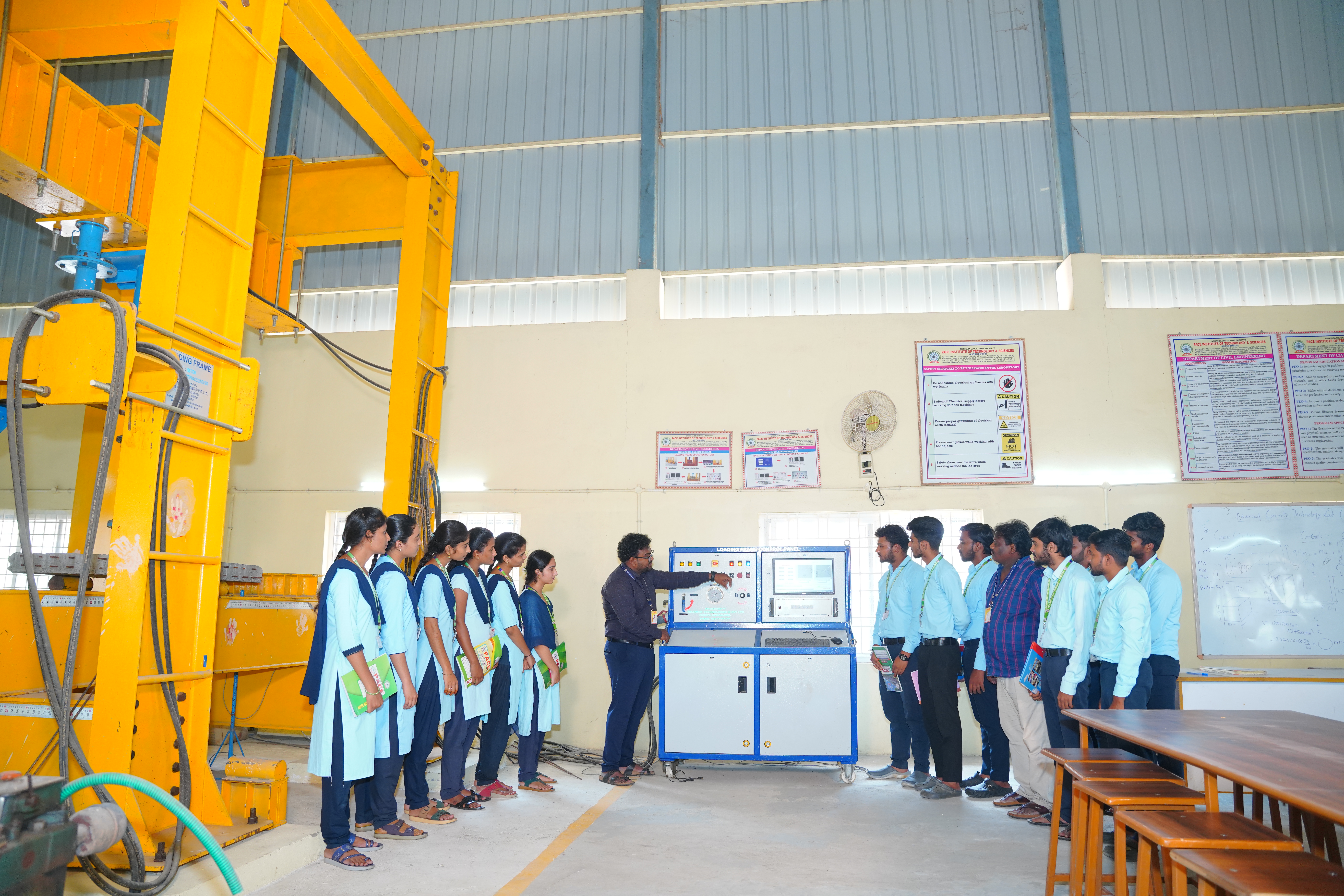 Structural Engineering Lab
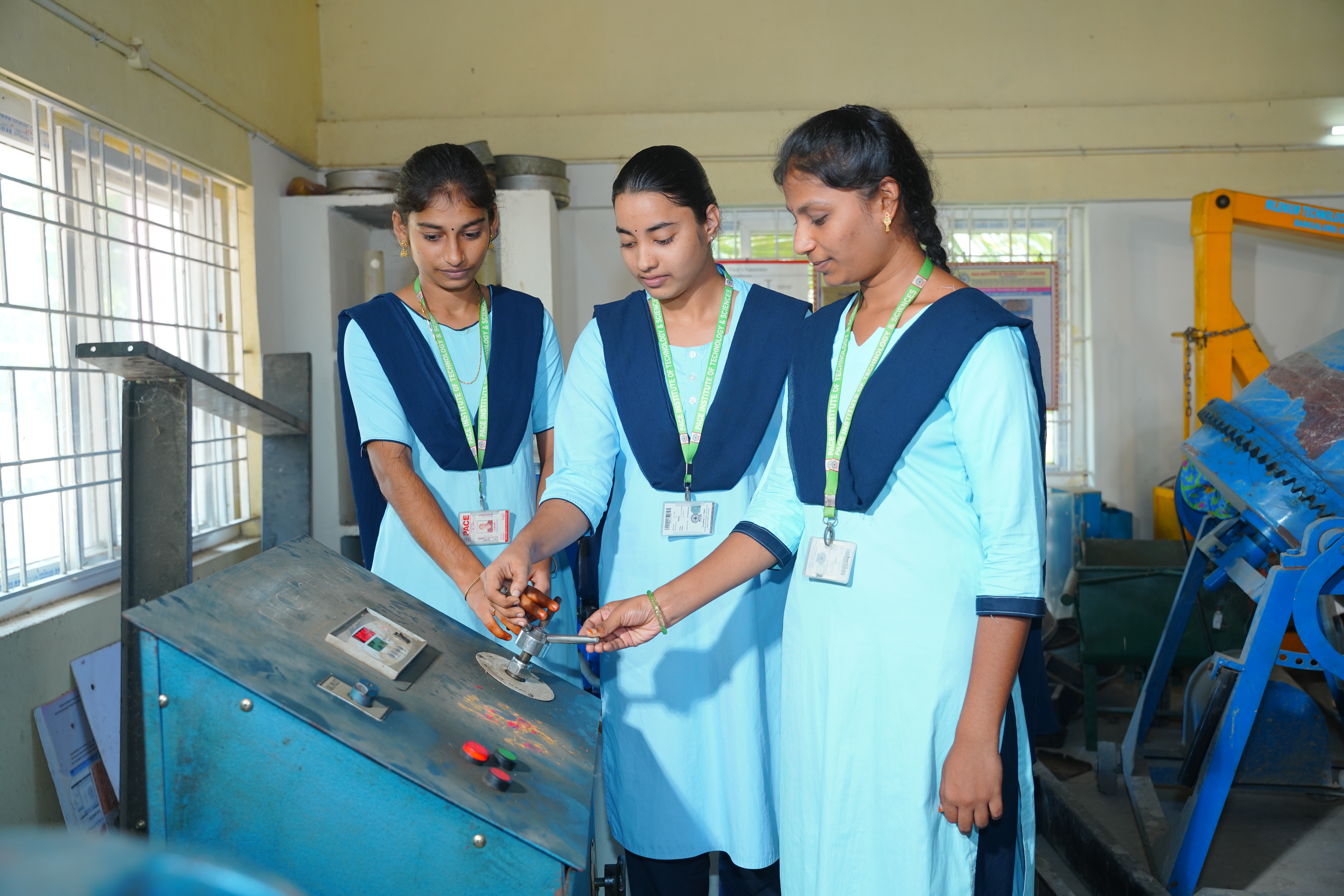 Concrete Technology Lab
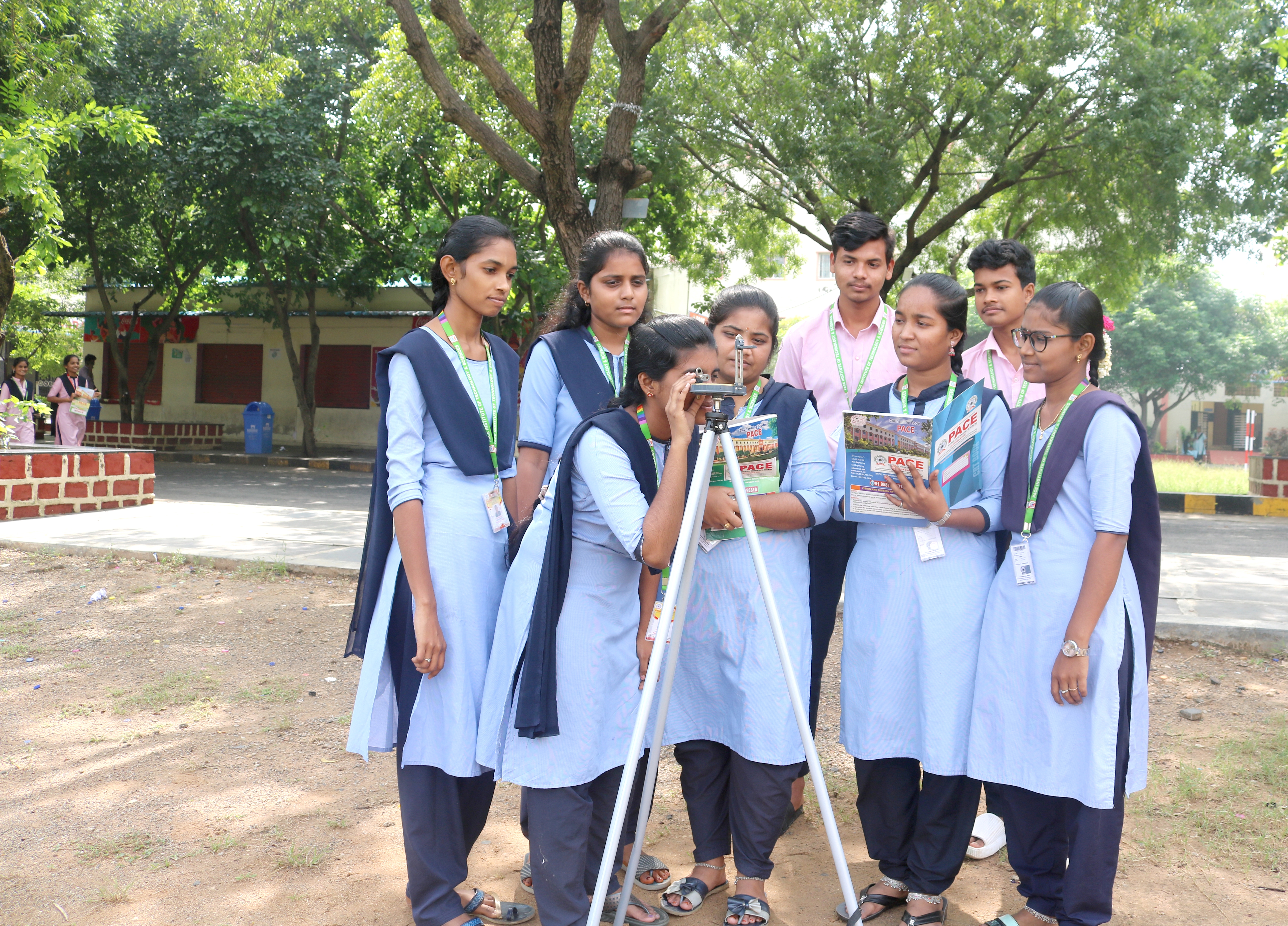 Surveying Lab
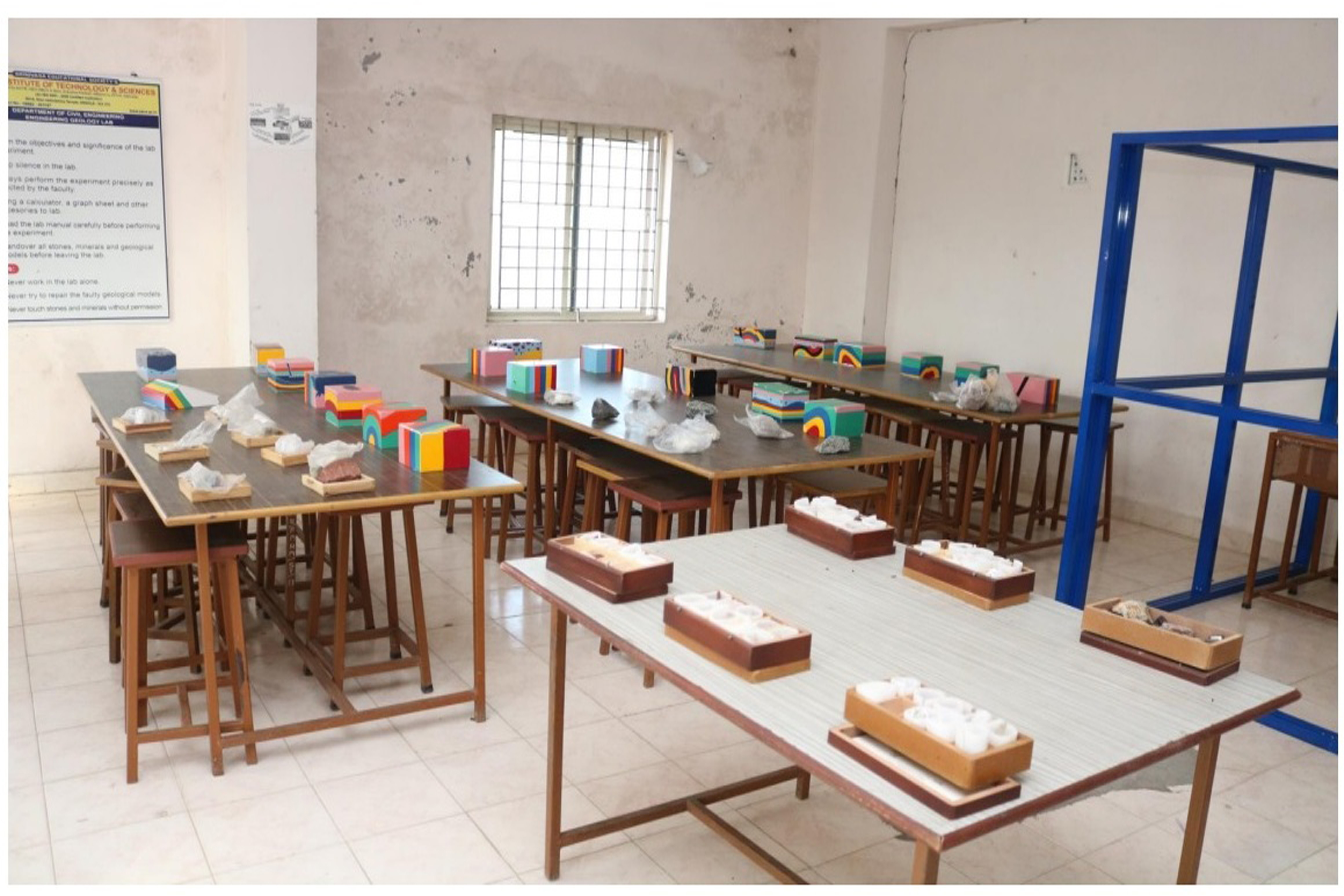 Engineering Geology Laboratory
| S.No | ROLL NO. | NAME OF THE STUDENT | YEAR OF PASSING | PERCENTAGE/ CGPA |
| 1 | 21KQ1A0163 | SHAIK FIRDOUSE | 2025 | 9.50 CGPA |
| 2 | 20KQ1A0106 | KELAM NANDINI | 2024 | 89.13 |
| 3 | 20KQ5A0105 | DASARI SAI DEEPTHI | 2023 | 9.50 CGPA |
| 4 | 18KQ1A0102 | BADUGU RAJ KUMARI | 2022 | 9.57 CGPA |
| 5 | 18KQ5A0112 | MATLAPUDI KOTAIAH | 2021 | 8.98 CGPA |
| 6 | 16KQ1A0172 | UPPUTURI LAKSHMI SIRISHA | 2020 | 8.68 CGPA |
| 7 | 15KQ1A0198 | RAJARAPU BHUSHAIAH | 2019 | 90.15% |
| 8 | 14KQ1A01C1 | ACHAKALA VENKATA SAI PAVANI | 2018 | 90.49% |
| 9 | 13KQ1A0165 | IDAMAKANKI SUDHINSHA | 2017 | 84.89% |
| 10 | 12KQ1A0107 | DUDDELA MAHESH | 2016 | 78.64% |
| 11 | 12KQ5A0107 | MODEPALLI NAGANAJALI | 2015 | 86.92% |
| 12 | 10KQ1A0143 | PATHAN SAMEERKHAN | 2014 | 84.99% |
| 13 | 09KQ1A0107 | BYPANENI SAI PAVAN KUMAR | 2013 | 82.84% |

PACE INSTITUTE OF TECHNOLOGY AND SCIENCES (PACE ITS), established Under Srinivasa Educational Society in 2008 at Valluru village near Ongole.It has been running successfully since the academic year 2008-09. PACE, being an NRI's project, is committed to create world class technocrats.

© PACE INSTITUTE OF TECHNOLOGY AND SCIENCES (PACE ITS)